

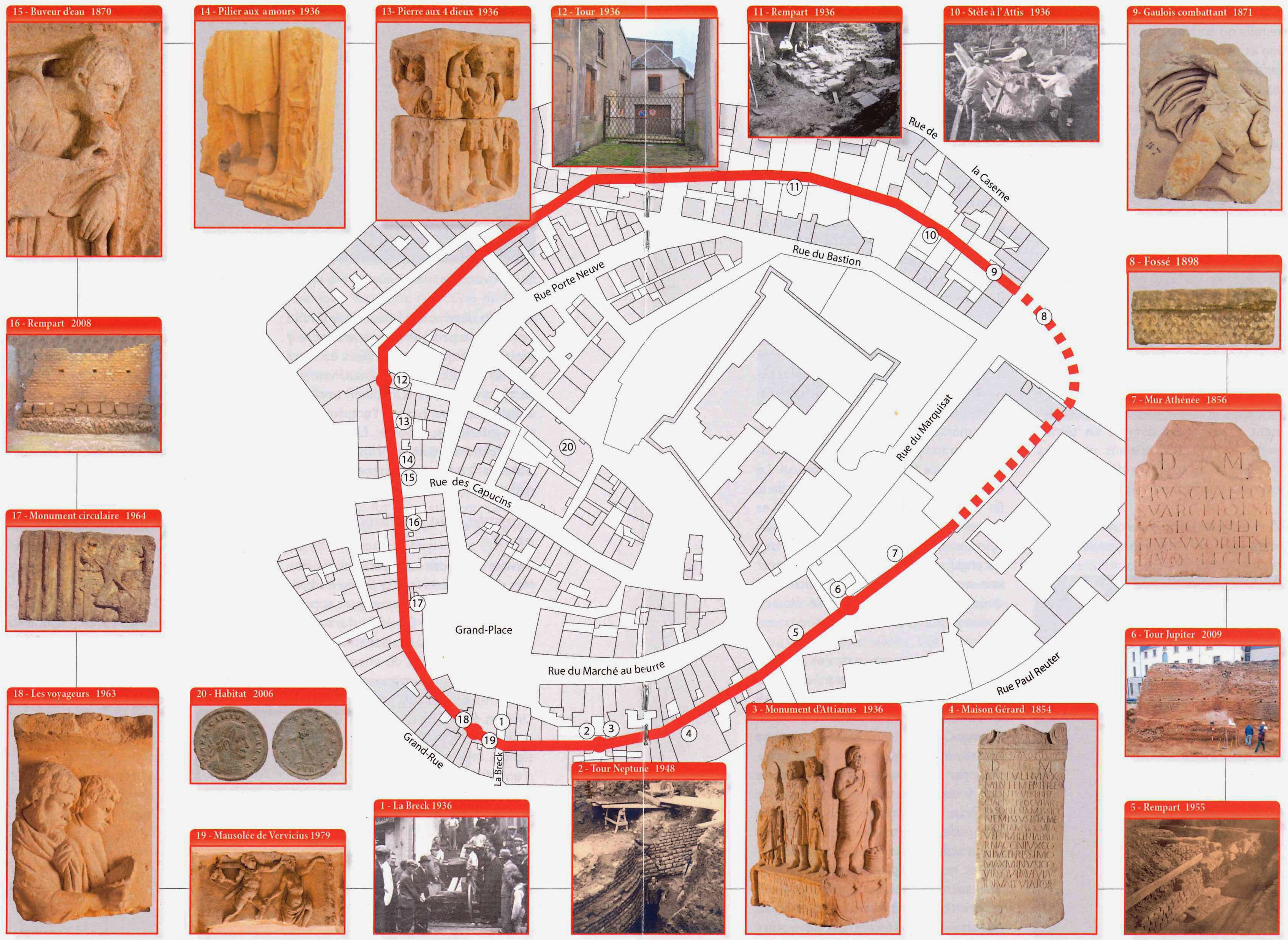
In 1979, Louis Lefèbvre took the opportunity of the renovation of the café on the corner of the Grand Place, near the place known as "la Breck", to continue his observations at the base of the tower discovered 15 years earlier. At the base of one of the towers in the Roman enclosure, a total of 23 carved blocks dating from the 2nd or 3rd century AD were discovered, as the archaeologist explains:
“We soon reached the base of one of the towers of the Roman wall, known in the Middle Ages as the Vichturm. Continuing their work, Patrick and Serge Thivoyon, André Debeux, Elzo Garofano and Jean-François Bar discovered the first carved blocks forming the base of the wall. [...] The first fragment to come to light was the one depicting the procession of Bacchus, a very fine sculpture [...].
Over the next few days, several other blocks were brought to the surface thanks to the installation of an inclined plane running from the bottom of the shaft dug in the cellar to the Breck staircase. Unfortunately, the funds ran out and the work had to be stopped [...]”.
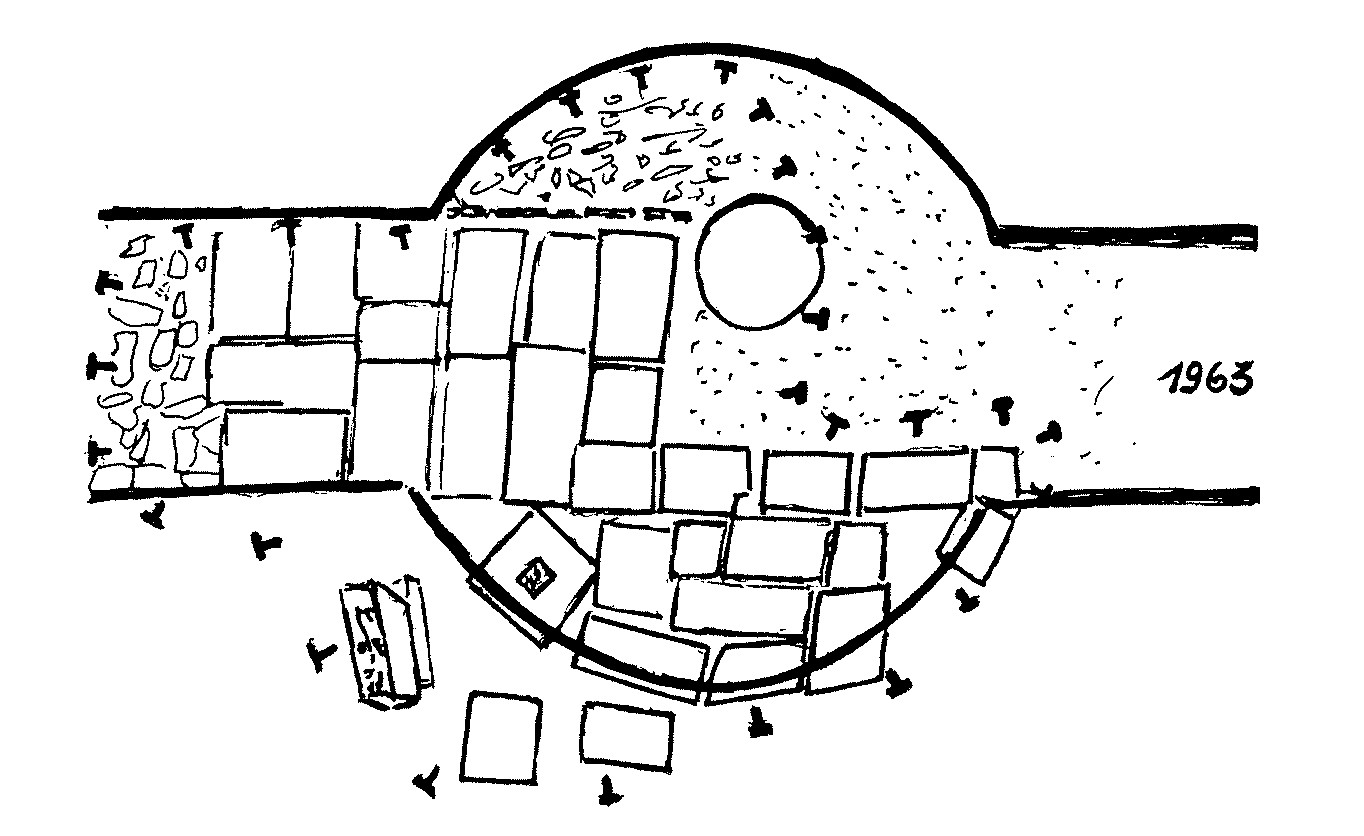
Drawing of the 1979-1980 excavations showing the various blocks discovered (© L. Lefèbvre, 1983).
The discovery was exceptional in that all six blocks of the mausoleum were found together. The excavation also brought to light fragments of architectural decoration, a cremation pit and pieces of columns.
In 1983, the owners placed all the fragments in 'permanent storage' at the Archaeological Institute of Luxembourg. In 2013, the monument was classified as an exceptional heritage site by the Wallonia-Brussels Federation.
