

This bas-relief, important for understanding the civil status of Arlon in Roman times, was discovered in 1938. That year, an excavation was carried out by Jacques Breuer (director of the excavation department of the Musées du Cinquantenaire in Brussels) and Arsène Geubel. The excavations took place a few metres from the southwest corner of the old cemetery of Arlon, close to the first-century Roman baths and the (present) source of the Semois.
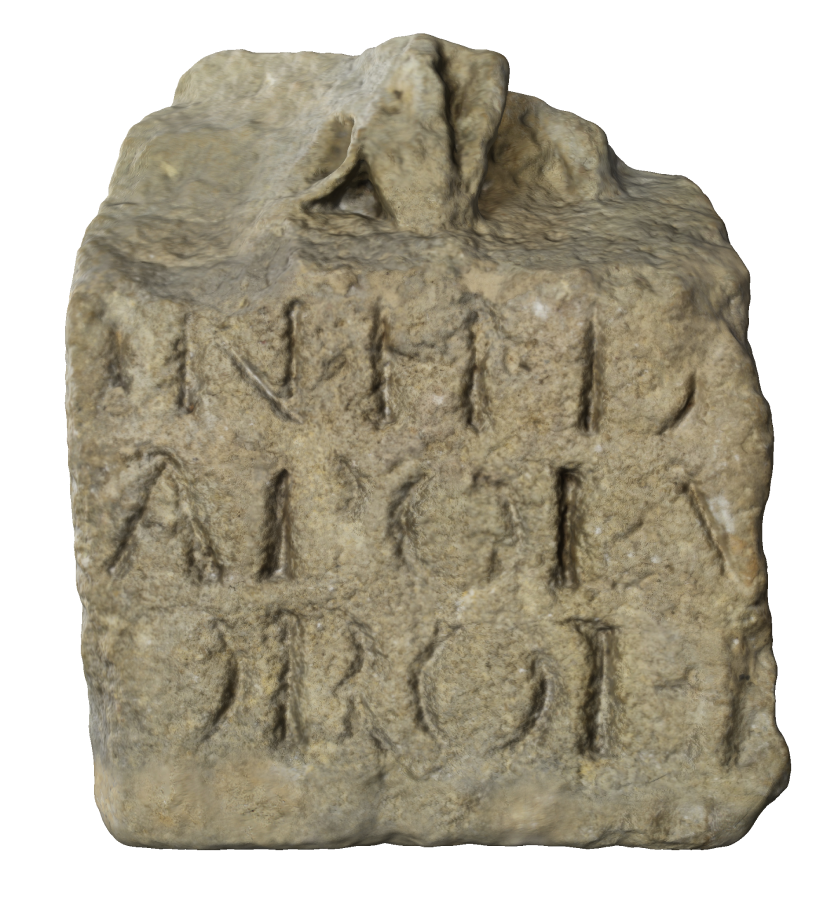
Originally it was a cippus, or small stele, dating from the end of the 2nd century AD, with a divinity in its central niche, which we will discuss later.
The pale brown stone was probably used in the construction or restoration of the surrounding wall of the ancient cemetery. If you look closely, you can still see the mortar traces covering all its faces.
Since 2012, the object has been classified as a Trésors de la Fédération Wallonie-Bruxelles.
